- If Bob won't behave better, I'll have to lower the boom on him. [Se Bob não se comportar bem, eu terei que puní-lo.]
- The teacher lowered the boom on the whole class for misbehaving. [O professor puniu a classe inteira por mau comportamento.]
Mostrando postagens com marcador o que significa?. Mostrar todas as postagens
Mostrando postagens com marcador o que significa?. Mostrar todas as postagens
quinta-feira, 27 de novembro de 2014
lower the bloom on someone: o que isso significa?
No post anterior, eu falei sobre uma expressão que, informalmente, significa criticar ou punir alguém de uma maneira bem severa. Hoje, eu tenho uma outra expressão que quer dizer mais ou menos isso, mas talvez com um pouco menos de severidade [vamos colocar desta forma]. A expressão que eu estou falando é "lower the bloom on someone". Como disse, ela significa punir. Mas esse ato de punir ao qual eu me refiro não é necessariamente físico. Você pode punir alguém com críticas e sermões de lição de moral. Veja os exemplos a seguir e memorize a expressão de uma vez por todas:

quarta-feira, 26 de novembro de 2014
get back on the horse: o que isso significa?

I know you burned the turkey trying to cook Thanksgiving dinner, but you can't let that stop you if you really want to become a chef. You'll just have to get back on the horse and try cooking it again.
Ja na segunda definição, to get back on the horse significa voltar a ter um hábito, geralmente um bom hábito. Então imagina que você, por algum motivo, deixou de comer de forma saudável, mas precisa voltar a ter esse hábito. You need to get back on the horse and eat healthy again. Veja outro exemplo:
I'd been
trying to do 30 minutes of exercise every day, but my work schedule eventually
got so busy I could never make it to the gym. Things have calmed down quite a
bit recently though and I keep meaning to get back on the horse and go work out
again.
a big girl's blouse
Dessa vez, vamos estudar um pouco do humor britânico e australiano. Eu falo dessa maneira porque a expressão de hoje é mais comum nesses países do que nos Estados Unidos. Imagina que vários amigos vão para um bar e, numa forma de instigar um deles a beber muito, eles dizem o seguinte: Come on you
big girl's blouse, drink up and I'll get you another pint.
Você provavelmente deve ter estranhado a presença da expressão "big girl's blouse na sentença. Trata-se na verdade de algo que nenhum homem quer ser chamado. a big girl's blouse é um homem ou um garoto que se comporta duma maneira que faz outros homens pensarem que ele é um frangote, que ele se comporta como uma mulher delicada, especialmente se ele está assuscado com alguma coisa. É um termo usado para talvez forçar um homem ou um garoto a fazer algo que ele tem medo. Veja mais um exemplo:
Você provavelmente deve ter estranhado a presença da expressão "big girl's blouse na sentença. Trata-se na verdade de algo que nenhum homem quer ser chamado. a big girl's blouse é um homem ou um garoto que se comporta duma maneira que faz outros homens pensarem que ele é um frangote, que ele se comporta como uma mulher delicada, especialmente se ele está assuscado com alguma coisa. É um termo usado para talvez forçar um homem ou um garoto a fazer algo que ele tem medo. Veja mais um exemplo:
Chad: I
don't want to to go sky diving while eating chilli.
Mike: Don't
be such a big girls blouse.get in the plane and bring the chilli.
Chad: Fine...out of season: o que isso significa?
A expressão de hoje tem três significados. Portanto, vamos direto ao ponto desta vez. O primeiro significado da expressão out of season é não disponível para venda. Por exemplo, você vai até um mercado e pergunta por ostras. Então o vendedor diz: Sorry, oysters are out of season. We don't have any. O motivo pela qual as ostras não estão disponíveis para a venda é que talvez não é um bom tempo para a sua reprodução, não existe ostras frescas e no ponto certo no momento. Esse é o primeiro significado da expressão.
O segundo significado de out of season é mais generalizado. Ele se refere a qualquer coisa que não é popular em determinado periodo do ano. Por exemplo: We like going to beach towns out of season. [Nós gostamos de ir para cidades praianas quando não é popular.] Ou seja, perceba que, desta vez, out of season não se refere necessariamente a algo relacionado a natureza, como frutas ou um molusco como a própria ostra que acabamos de mencionar no primeiro exemplo.
O terceiro significado de out of season se refere a um período do ano quando caçar ou pescar não é legalizado. Para ficar mais claro, veja esses exemplos: Are salmon out of season? I caught a trout out of season and had to pay a fine. Nesse sentido, out of season poderia significar em Português "fora do tempo legal de pesca ou caça". Muito simples, não é? Espero ter ajudado. Talk to you next time!
domingo, 25 de maio de 2014
Você sabe o que smarty pants e fancy-pants significam?

Now let's move on to our second expression "fancy-pants". You might be wondering why that expression has a hyphen and the first one does not. Well, that's one of the differences between the two expressions [besides their meanings]. Smarty pants is a noun, whereas fancy-pants is an adjective and therefore should always be used before a noun. If you want to make it a noun, all you have to do is drop the hyphen and there you have it. The same way in order to turn smarty pants into an adjective, include a hyphen and use it before a noun. Simple as that. But back to fancy-pants, if something or someone is fancy-pants, it tries to seem too attractive or too clever in a way that is false. What does that mean? Let's use an example to understand the expression better. You go to a very fancy restaurant and you order some expensive french dessert you quite don't understand. All you know is that it is pretty pricey. When it finally comes to your table, you realize it is nothing but a mango cut into little pieces, a fruit that is actually very common in the place you come from. You can't believe you're paying 10 times as much for something you get for free straight from your own mango tree at your backyard. When someone asks you about your experience at the restaurant, you say: The place was great, but not the fancy-pants food. That's it for today guys. Take care!
quinta-feira, 22 de maio de 2014
O que significa "to put it in a nutshell"?
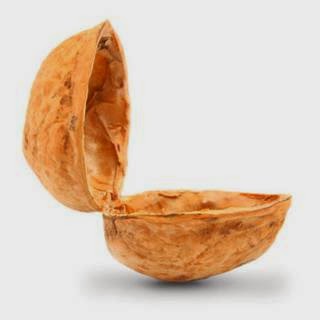
You know those moments when you want to be as straightforward as possible with someone? Maybe you're in a very complicated situation where you have to say something really embarrassing to someone. You want it to be really quick, so you make sure you use as fewer words as possible. For example, you're the boss at a very important company and now you have to lead a meeting with several of your employees to fire them. So, in the middle of the meeting, while you're trying to finally get to your point, you say: To put it in a nutshell, you're all fired.
In a nutshell means very briefly, something you say when you want to be very concise. So maybe during that meeting, you would have to go through all the explanations as to why your company needs to make many employees redundant. So to make things faster and easier [at least for you], you put it all in a nutshell and get it over with. The idea behind the expression is that a nutshell is very tiny and therefore it would hold a very small amount of anything. So imagine that when you use that expression, you're using a very small amount of words so it will fit in a nutshell. That's it for now guys. Take care!
quarta-feira, 21 de maio de 2014
O que significa "sticky hands"?
First of all, do you know what sticky means? If you're an intermediate English student, you must have realized that many adjectives tend to end with the letter y. Those are usually adjectives that come from a verb. Sticky, as our example, is actually everything related to something that sticks, that is to say, something that has the property of adhering to a surface. The thing is, sticky is part of many idiomatic expressions. Today we're going to learn one of them. Stay around and you won't regret.
What would you think if someone told you a friend of yours has sticky fingers? We've learned in the introduction of this post that something sticky is everything that has the property of sticking to a surface. So, does it make sense in your head if you said someone has sticky hands? Don't rush into thinking that that person is like spider-man that can crawl up buildings by just sticking to their walls. As an expression, when someone has sticky hands, it means he has a tendency to steal. It comes from the idea that everything that person touches sticks to his hands. So, imagine you're at work and something's been stolen. The thing is, over the past months, people from your work, including you, have missed something from their desk at some point of the day. So, People are starting to believe there might be someone in the office that has sticky hands. That's it for today guys. Take care!
What would you think if someone told you a friend of yours has sticky fingers? We've learned in the introduction of this post that something sticky is everything that has the property of sticking to a surface. So, does it make sense in your head if you said someone has sticky hands? Don't rush into thinking that that person is like spider-man that can crawl up buildings by just sticking to their walls. As an expression, when someone has sticky hands, it means he has a tendency to steal. It comes from the idea that everything that person touches sticks to his hands. So, imagine you're at work and something's been stolen. The thing is, over the past months, people from your work, including you, have missed something from their desk at some point of the day. So, People are starting to believe there might be someone in the office that has sticky hands. That's it for today guys. Take care!
terça-feira, 20 de maio de 2014
O que significa "pet peeve"?
Can you remember of something that's constantly annoying you? No matter what you do, there's no way you're getting rid of it for good. It will always come right back at you and haunt you once more. That's basically what we call a pet peeve. Bu let's dig into it a little further. It will be fun.
Let's think now about women. Everybody knows that women go through a certain sensitive period every month and we as men should therefore be more careful with every move we make around them. Many things can piss them off. One of the biggest pet peeve of theirs is men not putting down the toilet seat for them. We call it a pet peeve because it's a frequent annoyance, a very often encountered annoyance. But everybody has one or more pet peeves, not only women. For me, for example, one of my biggest pet peeves is waiting in line. I'm from Brazil and everybody knows how obsessed with lines we are. Even in places where lines are not even required, people make a point to form them. I just don't get it. It's a big pet peeve of mine. So what about yours? Tell me one of your biggest pet peeve in the comment section below! See you next time!
Let's think now about women. Everybody knows that women go through a certain sensitive period every month and we as men should therefore be more careful with every move we make around them. Many things can piss them off. One of the biggest pet peeve of theirs is men not putting down the toilet seat for them. We call it a pet peeve because it's a frequent annoyance, a very often encountered annoyance. But everybody has one or more pet peeves, not only women. For me, for example, one of my biggest pet peeves is waiting in line. I'm from Brazil and everybody knows how obsessed with lines we are. Even in places where lines are not even required, people make a point to form them. I just don't get it. It's a big pet peeve of mine. So what about yours? Tell me one of your biggest pet peeve in the comment section below! See you next time!
domingo, 18 de maio de 2014
Você sabe o que significa a expressão "hit and miss"?
The expression hit and miss has basically two meanings. We're going to get to know both of them through the examples I'm about to give you. I got those examples from Twitter, which is actually a very good way to look for an idiom and be certain of how native English speakers use it. I highly recommend it. One of the twits was like this: Blog awards can be really hit and miss. Do you understand what that means? Let's break it down.
When you call something hit and miss, you're saying it was carelessly planned. What the person from twitter meant to say by calling the blog awards hit and miss was that we shouldn't trust it, because it is actually made in such a random way that it shouldn't even be taken seriously. Let's think of a different example. Suppose you're given the mission of putting on a surprise party for one of your friends. All your mutual friends give you their contribution in money and you're expected to think about everything. The thing is, you didn't mention you would be very busy during all the preparations and the party ends up a total failure. The friends who entrusted you with that task get so shocked at how careless the place looked that some of them criticize you very harshly. One of them says: We entrusted you with that very special task and now everything seems like there was no planning. This party is just hit and miss!
A different twit shows the second meaning for the expression hit and miss. This time, we have someone speaking harshly about an actor and his works. The twit goes: He's not done anything funny since his last movie, and that was largely hit and miss. What does that mean? He was saying the only funny movie that actor's been part of was a success that happened by total chance, that is to say, by pure luck. There's another thing that's commonly called hit and miss. You know weather forecasting? it's become more accurate over the past years, but it used to be very hit and miss. It was as likely to be bad as to be good and people couldn't really trust it very much. Do you have your own examples? Leave us in the comment section bellow. See you!
O que significa a expressão "for old times' sake"?
People like to remember old memories right? There's even a very known saying that goes like "remembering is living", which in Portuguese would be something like "relembrar é viver". Old memories are also related to loved people that are no longer too close to you. For example, you had a very good childhood, but all your friends from the past have disappeared and the only thing left now are your memories. Suppose one day, while you're walking down the street, you run into a childhood friend you haven't seen in many years. It takes you a while to recognize him, but soon as it hits you that's your old friend, you run up to him for a very warm greeting. You try to do some catching up, but there's very much to tell. That's when you say: Do you want to have lunch together sometime, just for old times' sake?
When you do something for old times' sake, you do it as a way to remember a happy time in your past. Maybe you and your friend used to go out a lot in your childhood, but now for some reason you can't get together as often. So, for old times' sake, you have lunch together and catch up on each other's news. Speaking of which, if you know and like the american sitcom "Friends", you also must know that since its final episode, which was about 10 years ago, fans have expected them to reunite on the screen someday just for old times' sake. The thing is, Friends was such a huge success in the past. Putting the cast together just for one last time would be a very good idea, but I'm afraid that's never going to happen. That's it for today guys. Take care!
When you do something for old times' sake, you do it as a way to remember a happy time in your past. Maybe you and your friend used to go out a lot in your childhood, but now for some reason you can't get together as often. So, for old times' sake, you have lunch together and catch up on each other's news. Speaking of which, if you know and like the american sitcom "Friends", you also must know that since its final episode, which was about 10 years ago, fans have expected them to reunite on the screen someday just for old times' sake. The thing is, Friends was such a huge success in the past. Putting the cast together just for one last time would be a very good idea, but I'm afraid that's never going to happen. That's it for today guys. Take care!
sábado, 17 de maio de 2014
Você sabe o que significa o termo "backseat driver"?
The idiom of the day called my attention in a special way because I know someone who's a real backseat driver: my mom. I don't have my licence yet, but my brother's had his for a while and since the very first day he stepped into a car to drive, my mom's been giving him instructions from the backseat although she can't drive herself. In English, we call someone like that a backseat driver. Those are the people who continuously tell the driver how they should drive and can be very annoying at times. Do you know anyone like that?
The interesting thing about that idiom is that you can use it with anyone who tries to control things even though it is not their responsibility. People like that usually like to be the leader of everything and have a lot of trouble being controlled. I personally like a very famous brazilian TV show called O Aprendiz, which is actually based on the american TV show The Apprentice. The show stars some business people splitted into two teams competing in an elimination competition. What that show has to do with our idiom is that, since there's a different leader appointed by the two teams every week, we can clearly see who are the real backseat drivers. Those are the ones who always end up leading tasks that are supposed to be led by the leader. They always get in the way of some important decisions and want to have the final word in every argument. Backseat drivers usually get into a lot of troubles because they have a very strong personality. I'm not sure if that's a strength or weakness in the business world. What do you think? See you next time!
The interesting thing about that idiom is that you can use it with anyone who tries to control things even though it is not their responsibility. People like that usually like to be the leader of everything and have a lot of trouble being controlled. I personally like a very famous brazilian TV show called O Aprendiz, which is actually based on the american TV show The Apprentice. The show stars some business people splitted into two teams competing in an elimination competition. What that show has to do with our idiom is that, since there's a different leader appointed by the two teams every week, we can clearly see who are the real backseat drivers. Those are the ones who always end up leading tasks that are supposed to be led by the leader. They always get in the way of some important decisions and want to have the final word in every argument. Backseat drivers usually get into a lot of troubles because they have a very strong personality. I'm not sure if that's a strength or weakness in the business world. What do you think? See you next time!
O que significa a expressão "give someone a pass"? [expressão retirada do seriado Men at Work]
When you give someone a pass, you overlook something and give it only a cursory examination [even when the person deserves to be criticized]. You can do that for several reasons. Like in the case of the woman in the american sitcom, you may be too happy for caring about what they did or said. If we take a closer look at the idiom, we will realize it has everything to do with the context of a school. For example, a teacher may decide to advance a difficult student out of his grade for simply wanting to get rid of him. So he gives him a pass even though the student is not prepared. Do you have any examples of your own? Leave us in the comment section bellow. Talk to you next time!
O que significa "in one's second childhood"?
The expression of the day is very interesting because everybody is going to relate to it. You know those days when you're feeling like a child and want to do things adult people normally don't do? Our expression has everything to do with that feeling. Imagine, for example, you've always dreamed of going to Disneyland but your parents couldn't afford the trip when you were a child. Now you're all grown up, can afford your own trips and everything in your life has changed except for one thing: you still wanna go to Disneyland. One day, when you finally make it there, you're so blown away by everything in the place that you start acting like a child. People around you say you're in your second childhood. But wait, what does that mean?
When you're in your second childhood, you're interested in things or people that normally interest children. Can you remember of some examples of your own? C'mon! Everybody's like that at some point of their lives. For instance, if you still have your grandmother, don't you feel like you're back in your childhood every time you're around her? Let's suppose you spent the whole weekend at your grandma's and now you're back home talking to a friend of yours. He wants to know about your weekend and you say: It was awesome! Every time I spend weekends or holidays at grandma's, I feel as if I'm in my second childhood. We make cake, I go to the river and throw stones, she tells me all her stories and it's awesome. That's it for now guys. Talk to you next time!
segunda-feira, 12 de maio de 2014
O que significa "to go through the motions"?
There are many reasons for someone to be making a feeble effort to do something. If you're sad, for example, and you still have to do something, you may not put all effort into it and end up going through the motions. When someone very close to you dies, you may get so sad you wind up going through the motions of living. That means you're going to keep living because you have to, but you're not going to feel much of it, maybe you're going to follow through your routine in a very automatic way.
Let's think of a less dramatic situation: your husband has been pretty busy lately, and every time he gets home, he seems to want nothing but rest. Last time you asked him to play with the children and help them with their homework, you could see he was actually just going through the motions. He just sat by their side with his eyes barely open and it all seemed like a brutal torture. The thing is, the situation is getting so bad even during sex time you get the feeling he's just going through the motions. That's it for today guys. Take care!
sábado, 12 de abril de 2014
O que significa a expressão "to have a grip on something/someone"?
While I was listening to the song The Only Exception by Paramore, I couldn't help but notice a very interesting line that goes like: I've got a tight grip on reality. Do you know what that means? If you already know the song I'm talking about, you must know it's about a girl who's learnt from her own life experiences not to believe in love. The thing is, after a while, she ends up falling in love with a boy that makes her believe he's the only exception. That's when she says: I've got a tight grip on reality, but I can't let go of what's in front of me.
When you have or keep a tight grip on something or someone, you have control over it. The girl from the song believed to have some kind of control over her reality until she found a boy that made her rethink her attitude towards love. Having control over reality in this case means keeping it real, being as realistic as possible and never leaving room for love. That's it. See you soon!
When you have or keep a tight grip on something or someone, you have control over it. The girl from the song believed to have some kind of control over her reality until she found a boy that made her rethink her attitude towards love. Having control over reality in this case means keeping it real, being as realistic as possible and never leaving room for love. That's it. See you soon!
sexta-feira, 11 de abril de 2014
O que significa a expressão "burning the midnight oil"?

quinta-feira, 3 de abril de 2014
O que significa a expressão to squeeze something/someone in?
I was reading a dialogue between a client and a manager when a very interesting expression came up. The client was trying to make sure he'd get his paper ready for print by the end of the week, but the manager tried to tell him how tight his agenda was. After a while, the client's told not to worry anymore because the manager might be able to squeeze it in if he works late a few nights. What just happened here? Do you know what the expression to squeeze something in means? If not, just keep reading...
When you say you're going to squeeze something in, what you're actually saying is that you're going to be able to do something even though you do not have much time. That's what happened in the context of our dialogue: the manager said he would spend a few nights awake, maybe doing extra work during the day as well, so he would be able to get the job done before the week ends. He squeezed it in. We could also say "he squeezed the client in, he squeezed him in" because the expression is also used with people. Let's try to think of a different situation: You've been very busy lately, but then you realize you need to meet up with your workmates to discuss some issues that have come up in your work environment. Although you're already tied up enough, you think you could squeeze a meeting in very early tomorrow morning. You squeeze a meeting in. You found time to attend a meeting even though you had so much to do. How many other things that people usually squeeze in you can think of? Maybe a little trip, some lessons, an extra hour's work, etc. Okay, that's it for now guys. Take care!
When you say you're going to squeeze something in, what you're actually saying is that you're going to be able to do something even though you do not have much time. That's what happened in the context of our dialogue: the manager said he would spend a few nights awake, maybe doing extra work during the day as well, so he would be able to get the job done before the week ends. He squeezed it in. We could also say "he squeezed the client in, he squeezed him in" because the expression is also used with people. Let's try to think of a different situation: You've been very busy lately, but then you realize you need to meet up with your workmates to discuss some issues that have come up in your work environment. Although you're already tied up enough, you think you could squeeze a meeting in very early tomorrow morning. You squeeze a meeting in. You found time to attend a meeting even though you had so much to do. How many other things that people usually squeeze in you can think of? Maybe a little trip, some lessons, an extra hour's work, etc. Okay, that's it for now guys. Take care!
quarta-feira, 2 de abril de 2014
O que significa errand? [e a diferença entre errand e chore]
This is a sentence I got from some random website: she ran some errands for her mother, then spent the rest of the day working on
an English paper, doing household chores, and listening for the phone.
Forget the rest of the sentence for now and focus on the word errand. Do you know what that is? According to Dictionary.com, errand is "a short and quick trip to accomplish a specific purpose, as to buy something, deliver a package, or convey a message, often for someone else." If you still think it's hard to understand, let's think of the word in context. See one more time the beginning of the sentence above: she ran some errands for her mother. When we don't know the meaning of a word, we have to pay attention to the words surrounding it. In this case, we see the word errand is combined with the verb run: run + errand. That's a collocation. When you run an errand, or do errands, go on some errands for somebody else or for yourself, you're in a little mission to accomplish a purpose. For example, if you still live with your parents, you're very likely to run some errands for your mother. And what are some of those errands? Paying a bill, taking clothes to dry cleaners, going to the mailbox, shopping, etc. Do you realize those example have something in common? That's right: Those are all things you do outside of your house, you have to leave home to attend to those business. There's a different word for routine tasks you lead at home: CHORE. Examples of chores are ironing, cleaning, cooking, taking out trash, washing the dishes, doing laundry, etc.
Forget the rest of the sentence for now and focus on the word errand. Do you know what that is? According to Dictionary.com, errand is "a short and quick trip to accomplish a specific purpose, as to buy something, deliver a package, or convey a message, often for someone else." If you still think it's hard to understand, let's think of the word in context. See one more time the beginning of the sentence above: she ran some errands for her mother. When we don't know the meaning of a word, we have to pay attention to the words surrounding it. In this case, we see the word errand is combined with the verb run: run + errand. That's a collocation. When you run an errand, or do errands, go on some errands for somebody else or for yourself, you're in a little mission to accomplish a purpose. For example, if you still live with your parents, you're very likely to run some errands for your mother. And what are some of those errands? Paying a bill, taking clothes to dry cleaners, going to the mailbox, shopping, etc. Do you realize those example have something in common? That's right: Those are all things you do outside of your house, you have to leave home to attend to those business. There's a different word for routine tasks you lead at home: CHORE. Examples of chores are ironing, cleaning, cooking, taking out trash, washing the dishes, doing laundry, etc.
sábado, 15 de março de 2014
O que significa "to be dressed up to the nines"?
Hey guys, it's been a while since I last posted something on here. This time, what encouraged me to finally get back on track was a very known song by Justin Timberlake called Suit and Tie. You definitely know what I'm talking about . In one of the verses of the song, you hear him sing "and you got fixed up to the nines". What does that mean? If you get fixed up to the nines or dressed up to the nines, you're wearing very fancy clothes for a special occasion. People usually are dressed up to the nines for weddings or very formal parties. A perfect chance for you to see people dressed up to the nines is the Oscars. Celebrities, especially women, can pay really big money to show up impeccable at the cerimony.
Now that you've learned the idiom to be dressed up to the nines, can you remember any other idiom with the word nine in it? Let me know in the comment section.
Now that you've learned the idiom to be dressed up to the nines, can you remember any other idiom with the word nine in it? Let me know in the comment section.
sexta-feira, 28 de fevereiro de 2014
O que significa "far-fetched"?
Eu estava conversando com uma amiga inglesa sobre um filme que eu tinha acabado de assistir quando uma simples palavra me fugiu da memória. Foi aí que minha caça à palavra perdida começou. Revirei o Google inteiro por ideias que pudessem se ligar ao que eu queria tanto achar, mas nada adiantou. Só depois de algum tempo, quando sequer tinha mais a intenção, que o vocábulo veio à tona como mágica: far-fetched. Esse é um adjetivo que caracteriza algo como improvável, difícil de acreditar, inacreditável. Na nossa cultura, nós temos o hábito de dizer que pescador tem muita história duvidosa, que requer uma certa disposição para ser acreditada. Poderíamos chamar essas histórias, então, de "far-fetched stories". Exemplo: The story he told me yesterday was too far-fetched.
Você ainda se lembra do filme sobre o qual eu falava com minha amiga inglesa? O filme é "Her", de Spike Jonze, que basicamente conta a história de um homem que se apaixona pela voz dum computador, que é na verdade um sistema operacional. Apesar de se tratar de fato de uma ficção científica, e é intencionalmente feito para soar utópico, chegou um ponto que o roteiro saiu dos eixos, na minha opinião. The plot seemed too far-fetched. [a trama parecia muito utópica/difícil de acreditar]. Take care!
Você ainda se lembra do filme sobre o qual eu falava com minha amiga inglesa? O filme é "Her", de Spike Jonze, que basicamente conta a história de um homem que se apaixona pela voz dum computador, que é na verdade um sistema operacional. Apesar de se tratar de fato de uma ficção científica, e é intencionalmente feito para soar utópico, chegou um ponto que o roteiro saiu dos eixos, na minha opinião. The plot seemed too far-fetched. [a trama parecia muito utópica/difícil de acreditar]. Take care!
Assinar:
Postagens (Atom)